
Introduction to volcanoes
Volcanoes are openings in the Earth's crust that allow magma, gases, and ash to escape from below the surface. They are one of the most powerful natural forces and have shaped landscapes, climates, and human history.
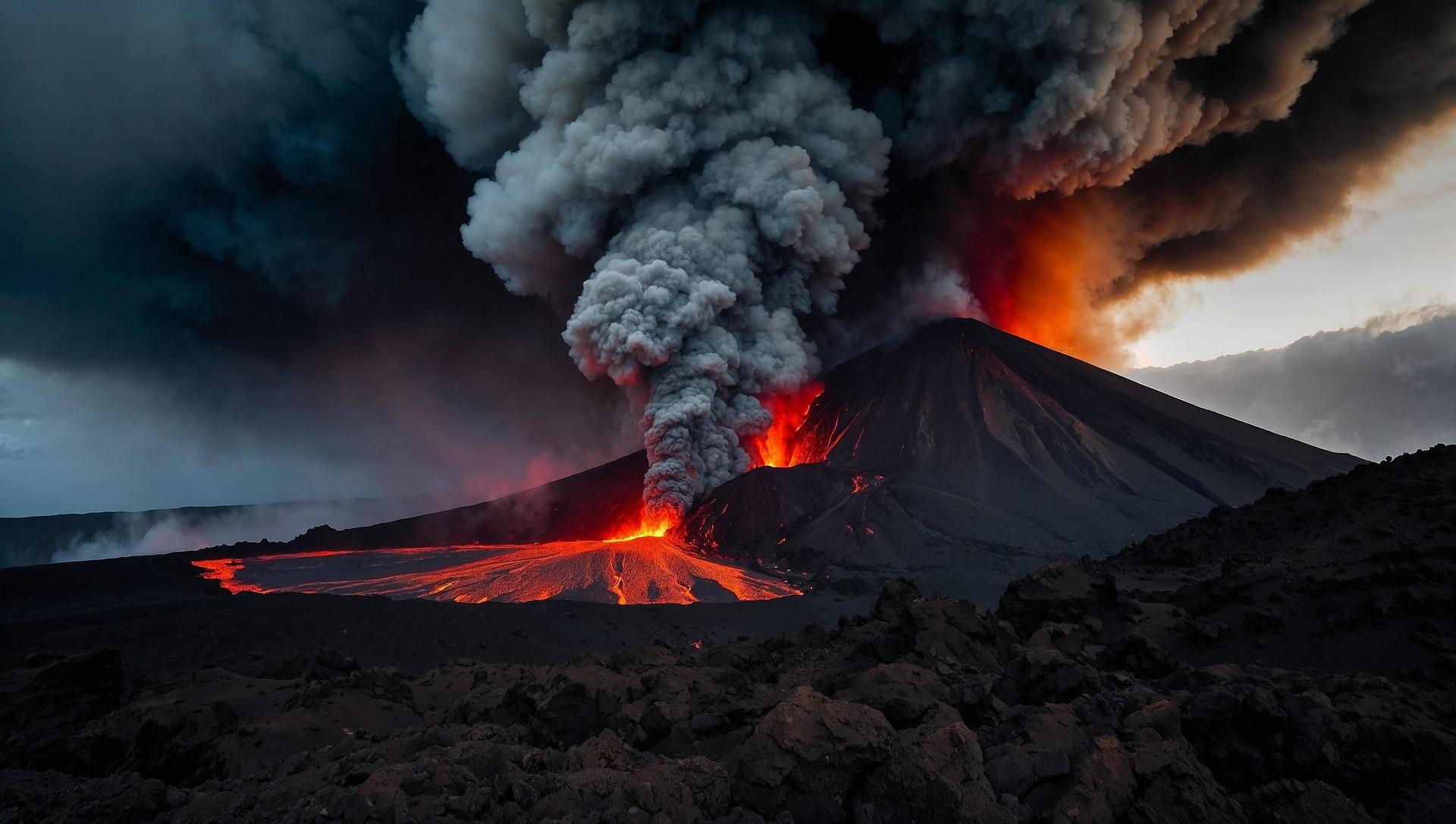
Volcanic activity occurs where tectonic plates meet, diverge, or form hotspots. The Pacific Ring of Fire is a prime example of a region with frequent volcanic eruptions and earthquakes due to plate subduction.
Basics of volcanoes
Volcanoes are natural openings in the Earth's crust where magma, gases, and ash escape from below the surface. They form due to the movement of tectonic plates or from hotspots in the mantle. Understanding the basics of volcanoes helps explain how they erupt, shape landscapes, and sometimes trigger earthquakes.
Key concepts to know:
- Magma vs. lava: Magma is molten rock beneath the Earth's surface. Once it erupts, it is called lava.
- Crater: The opening at the top of a volcano where eruptions occur.
- Vent: The passage through which magma rises to the surface.
- Eruption types: Eruptions can be explosive, sending ash and pyroclastic flows high into the sky, or effusive, producing slow-moving lava flows.
- Volcano lifecycles: Volcanoes can be active (currently erupting or likely to erupt), dormant (inactive but could erupt in the future), or extinct (no longer capable of erupting).
How a volcano works
A volcano forms when magma from the Earth's mantle rises through cracks in the crust. When pressure builds up, it erupts as lava, ash, and gases. There are several types of volcanoes:
- Shield volcanoes – wide, gently sloping, formed by low-viscosity lava (e.g., Mauna Loa, Hawaii).
- Stratovolcanoes (composite volcanoes) – steep, explosive eruptions, alternating layers of lava and ash (e.g., Mount Fuji, Japan).
- Cinder cones – small, steep-sided, made of volcanic debris (e.g., Paricutin, Mexico).
- Calderas – collapsed volcanoes after a massive eruption (e.g., Yellowstone, USA).
Volcanoes and earthquakes
Volcanoes and earthquakes are closely connected:
- Subduction zones: One plate slides under another, causing earthquakes and forming volcanoes.
- Magma movement: The movement of magma underground can trigger minor earthquakes.
- Volcanic eruptions: Often preceded by swarms of small earthquakes as magma forces its way up.
Regions like the Pacific Ring of Fire are prone to both major earthquakes and active volcanoes because of these tectonic processes.
Famous volcanoes around the world
| Volcano | Country/Region |
|---|---|
| Mount Fuji | Japan |
| Mount Vesuvius | Italy |
| Mauna Loa | Hawaii, USA |
| Mount Merapi | Indonesia |
| Mount Pinatubo | Philippines |
| Eyjafjallajökull | Iceland |
| Mount St. Helens | USA |
| Paricutin | Mexico |
| Krakatoa | Indonesia |
Volcanoes and climate
Volcanic eruptions can have significant impacts on the Earth’s climate. Large eruptions eject ash and gases like sulfur dioxide (SO₂) into the atmosphere, which can:
- Cool the planet temporarily by reflecting sunlight away. For example, the 1991 eruption of Mount Pinatubo caused a global temperature drop of about 0.5°C.
- Affect local weather patterns, creating acid rain and unusual precipitation.
- Disrupt air travel due to ash clouds.
Understanding these effects is crucial for climate science, agriculture, and disaster preparedness.
Why volcanoes matter
- Geologic research: Volcanoes reveal how the Earth’s interior works.
- Natural hazards: Eruptions can destroy cities, but understanding them helps with disaster preparedness.
- Ecosystems and soil: Volcanic ash creates fertile soil, and lava flows shape new landscapes.
- Tourism and culture: Many volcanoes are culturally significant and attract visitors from around the world.
Related articles
References
- US Geological Survey (USGS) – Volcano Hazards Program
- Smithsonian Institution – Global Volcanism Program
- National Geographic – Volcanoes 101