
The 2004 Indian Ocean earthquake and tsunami
On December 26, 2004, one of the most powerful earthquakes ever recorded struck off the western coast of Sumatra, Indonesia. The earthquake reached a magnitude of approximately 9.1–9.3, making it one of the largest in modern history.
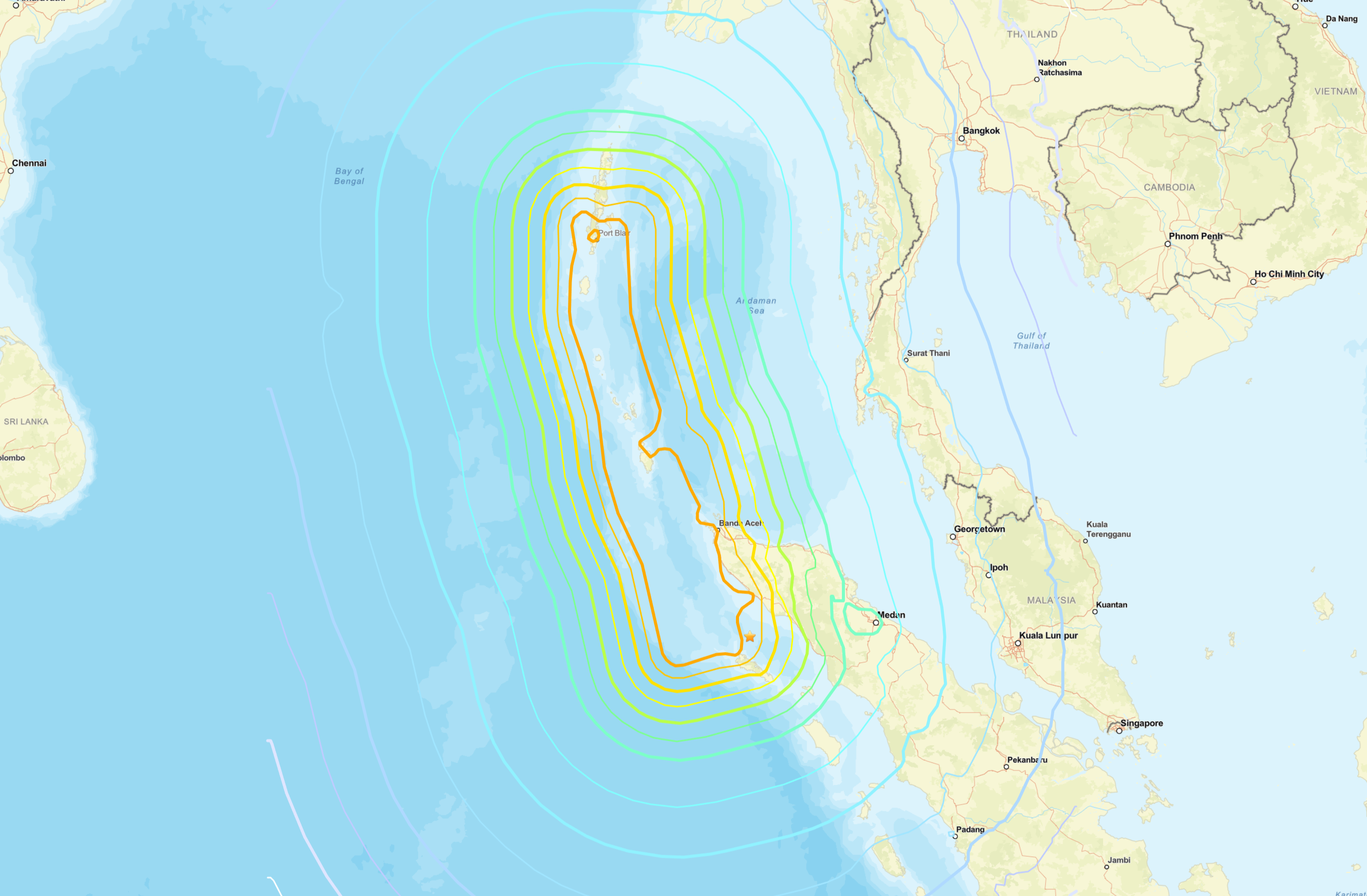
The quake occurred along the Sunda megathrust, where the Indo-Australian Plate is subducting beneath the Eurasian Plate. The rupture extended for more than 1,500 kilometers, causing a dramatic shift in the seafloor and releasing enormous seismic energy.
The tsunami
The sudden uplift of the ocean floor displaced massive amounts of water, generating a tsunami that spread across the entire Indian Ocean.
In some parts of Indonesia’s Aceh Province, wave heights reached up to 30 meters. The tsunami traveled thousands of kilometers, impacting the coasts of:
- Indonesia
- Thailand
- Sri Lanka
- India
- Maldives
- Somalia, Tanzania, and other regions of East Africa
Because many affected areas lacked tsunami early warning systems, coastal populations had little or no time to evacuate.
Human and social impact
The disaster caused immense human loss and destruction:
- Over 230,000 deaths across 14 countries.
- Hundreds of thousands of injuries.
- Millions of people displaced from their homes.
- Entire coastal towns and livelihoods destroyed.
Indonesia’s Aceh region was among the hardest hit, where infrastructure, homes, schools, and ports were swept away in minutes.
Recovery and international response
The global response became one of the largest humanitarian relief efforts in history. Efforts focused on:
- Emergency rescue and food distribution.
- Rebuilding homes and community infrastructure.
- Restoring fishing and tourism economies.
- Providing long-term psychological and healthcare support.
Recovery took years and required cooperation between governments, international organizations, and local communities.
Long-term effects and lessons learned
The 2004 disaster led to major improvements in tsunami awareness and preparedness, including:
- Establishing the Indian Ocean Tsunami Warning and Mitigation System.
- Expanding global seismic and ocean monitoring networks.
- Community education on evacuation routes and natural warning signs.
- Considering tsunami risk in coastal planning and development.
The event highlighted the importance of early warning systems, public education, and international coordination.
Related articles
References
- United States Geological Survey (USGS). M 9.1 – 2004 Sumatra-Andaman Islands Earthquake
- National Oceanic and Atmospheric Administration (NOAA). December 26, 2004 — The Indian Ocean Tsunami
- Encyclopaedia Britannica. Indian Ocean tsunami of 2004