
The basics of landslides
A landslide is the sudden movement of rock, soil, or debris down a slope, often triggered by rainfall, earthquakes, volcanic activity, or human activity. Landslides can range from small slips that damage a single road to massive flows that destroy entire communities.
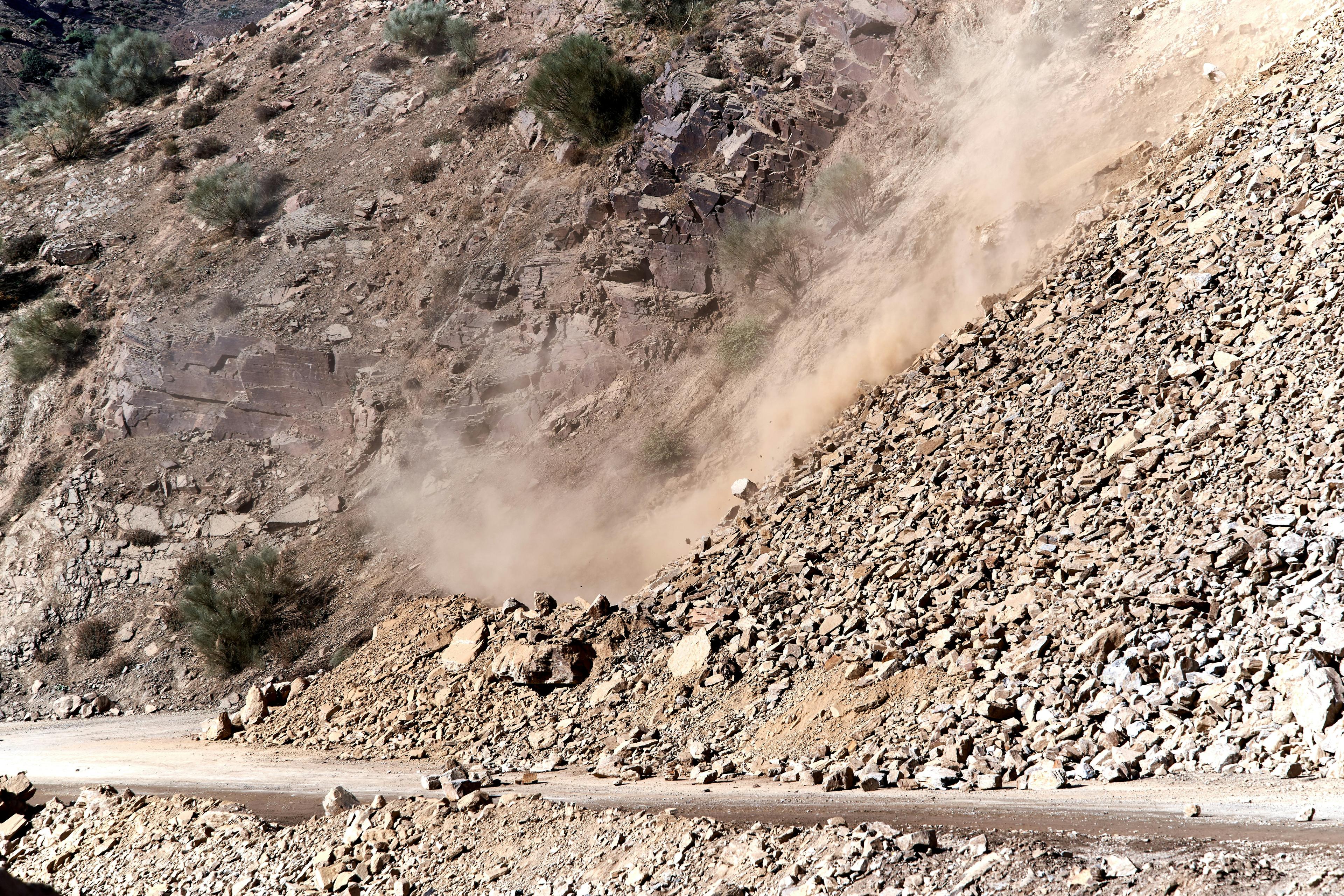
Unlike floods or earthquakes, landslides usually occur locally, but their effects can be devastating — burying homes, blocking rivers, and cutting off transportation.
How landslides occur
Landslides happen when the forces pulling material downhill exceed the forces holding it in place. Factors include:
- Slope steepness – steeper slopes are more vulnerable
- Soil and rock type – loose or weathered materials move more easily
- Water saturation – heavy rainfall or snowmelt can lubricate slopes
- Vegetation loss – trees and roots help stabilize soil; deforestation increases risk
- Earthquakes – sudden shaking can trigger slope failure
Types of landslides
- Rockfalls – blocks of rock break off and tumble down a cliff
- Mudflows / debris flows – fast-moving, water-saturated soil and rocks
- Slumps – a rotational slide along a curved surface
- Creep – slow downhill movement of soil over years
Warning signs and risks
You may be able to predict landslide risk by observing:
- Cracks in the ground, roads, or retaining walls
- Tilting trees or fence posts
- Water seepage from the ground
- Recent heavy rainfall or rapid snowmelt
Landslides can destroy property, block roads, and cause fatalities, particularly in mountainous or hilly regions.
Safety and preparedness
While landslides are often sudden, you can take steps to protect yourself and your property:
- Avoid building near steep slopes or unstable terrain
- Plant vegetation to stabilize soil
- Construct retaining walls where necessary
- Monitor local landslide alerts from authorities
- During a landslide, move perpendicular to the slope to escape, and take cover in sturdy structures if available
For broader disaster preparedness, including earthquakes and tsunamis, see our guides on earthquake safety and making your home safer.
Notable landslides in history
| Date | Location | Cause | Impact |
|---|---|---|---|
| May 31, 1970 | Huascarán, Peru | Earthquake-triggered | ~20,000 deaths; buried towns under mud and debris |
| July 16, 1995 | Oso, Washington, USA | Saturated soil | 43 deaths; entire neighborhood destroyed |
| August 7, 2014 | Kashmir, Pakistan | Heavy rainfall | ~200 deaths; roads and homes destroyed |
| September 10, 2008 | Sichuan, China | Earthquake | Thousands buried in debris, part of the Wenchuan earthquake aftermath |
Key takeaways
- Landslides are rapid downslope movements of soil and rock, often triggered by natural events.
- Steep slopes, water, loose soil, and vegetation loss increase the risk.
- Observing warning signs and preparing in advance can save lives and reduce damage.
- Landslides often occur alongside earthquakes or heavy rainfall, making combined disaster preparedness essential.
References
- US Geological Survey (USGS) – Landslide Hazards Program
- Encyclopaedia Britannica – Landslide